
Tragedy in Kossuth Cave: The Heart-Stopping Final Dive of Martin ‘Marcy’

| Incident Location (Country / Region / Cave Name) | Diver Full Name (Deceased) |
|---|---|
| Hungary, Aggtelek National Park (near Slovakian border), Kossuth Cave | Martin “Marcy” |
At 42 years old, Martin—known to friends as Marcy—was considered one of Hungary’s most skilled and respected divers. He was a multiple national champion in navigational scuba diving and won silver and bronze medals on the world stage. His mastery of diving gear and underwater navigation served a purpose far beyond competition.

A Careful and Highly Skilled Explorer
Marcy made a substantial contribution to Hungary’s underwater cave research scene since she was equally at ease in dry caverns and flooded passageways. He investigated submerged systems in Bosnia, Hungary, and Montenegro for years. Even with the most sophisticated dive computers, diving tanks, and safety equipment, friends would frequently make fun of his great caution.
Marcy saw reason to stop, think things over, and get ready before moving on, while others found opportunity in uncharted tunnels. He was well trusted in part because of his cautious attitude.
The Call No One Wanted to Receive
On Sunday, April 3rd, 2022, András—the leader of the Hungarian Cave Rescue Service—received a call he instantly knew was bad news. He had handled countless emergencies involving injured explorers and trapped cave divers. But this call was different.
He was told that a diver had gone missing in Kossuth Cave, located in Hungary’s Aggtelek National Park near the Slovakian border. Earlier that day, a team of experienced divers had been exploring Siphon 3, and Marcy had failed to return.
Racing Against Time
Everyone was aware of Marcy’s dependability, so the news was devastating. If he hadn’t reappeared, there was a serious problem. Andrés started organizing a response right away, putting together a team, and getting ready for anything.
He was also aware of the harsh fact that Marcy had been submerged for hours and would not be able to survive until he discovered an air pocket. Around 11 p.m., Andrés arrived at the scene to see rescuers, tents, medical personnel, and divers getting ready with their equipment, diving masks, and suites.
Hungary Unites Its Best Rescuers
All three of Hungary’s cave rescue groups reacted right away. Strategies were debated, equipment was arranged, and several rescuers ventured into the dry areas of the cave to evaluate the situation.
Andrés oversaw logistics, concentrating on the few divers who were familiar with Siphon 3. Unfortunately, Marcy had been one of the few specialists on that list. Viktor and Andrés were two more important divers, both of whom had much experience.
Preparing to Enter Siphon 3
Viktor, with over 25 years of experience, had been Marcy’s partner on many expeditions. Together, they were the only divers who had ever reached the furthest known point of Siphon 3. Now Viktor would have to return, not on a joint mission, but to find his missing friend.
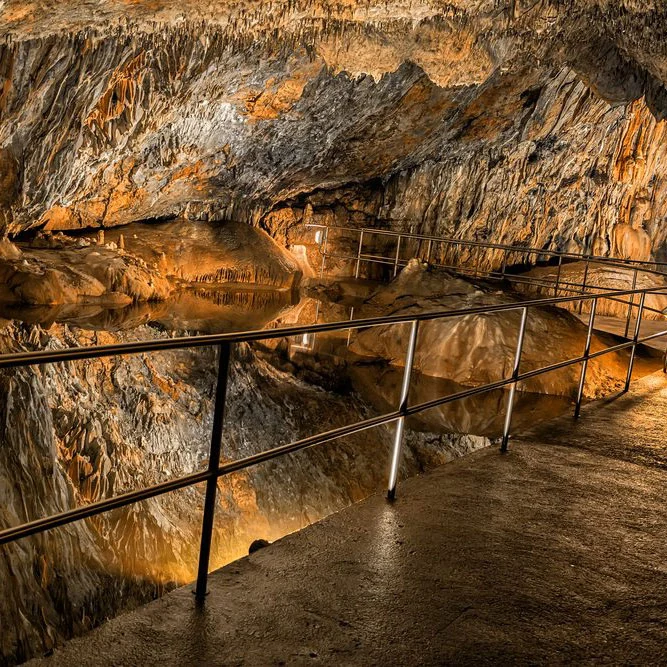
Complex cave rescues take time. Kossuth Cave, discovered in 1956, is one of Hungary’s most fascinating cave systems. Explorers reached what became the dry passage and eventually stopped at the water-filled section named the Hopeless Siphon.
Depth, Darkness, and Danger
Beyond the Hopeless Siphon, the passage disappears underwater. A cave stream flows through this submerged section and into a small lake before reaching the entrance. Today, the mapped system stretches nearly 1,500 meters (4,921 feet) and drops 52 meters (171 feet) vertically.
For decades, the Hopeless Siphon marked the end of exploration attempts. Divers repeatedly tried to get through without success. The A4 Diving Club spent years widening tunnels, installing guide lines, and preparing the cave for deeper exploration.
New Frontiers Reached
In 2009, divers finally passed the Hopeless Siphon and entered a massive chamber named Our Father’s Hall. This chamber ended at another submerged section. To continue, divers had to navigate an even tighter flooded route called Siphon 2, leading to a small air pocket and then to Siphon 3.
Siphon 3 descended to 48 meters (157 feet) in depth. It was here that tragedy would unfold.
The First Search Mission
Snow covered the ground on April 4th as rescuers completed final checks on diving gear, lights, and diving tanks. At 4:02 p.m., Viktor and András entered the freezing, dark water and headed toward Siphon 3.
Their goal was to reach the far end, assess conditions, and search for Marcy. The passage was extremely narrow, visibility near zero, and temperatures close to freezing. After nearly an hour, they resurfaced.
Evidence of Collapse
Viktor reported that the tunnel in Siphon 3 was completely blocked by collapsed clay and rock. The guideline was buried. There was no safe way forward.
Rescuers gathered to review helmet camera footage. The video clearly showed a wall of debris where a passage once existed. Then someone noticed something metallic in the corner of the frame. It appeared to be the edge of a scuba tank.
Hope Mixed with Doubt
If that tank belonged to Marcy, perhaps he had passed through to an air pocket beyond the collapse. This sparked cautious hope. But uncertainty remained. No one could confirm what they were seeing or whether it indicated survival.
A new plan was developed to get clearer visuals. The next day at 5:00 p.m., the team returned.
The Second Dive
Twenty-six minutes later, András resurfaced exhausted and freezing. He could not get through Siphon 3. Viktor, however, pressed on.
Nearly an hour later, he returned. Silence filled the cave as everyone watched him remove his diving mask. His expression revealed the truth before he spoke.
Viktor had found Marcy—and he was gone.
Where He Was Found
Marcy’s body was located about 30 meters (98 feet) into Siphon 3, just beyond the collapsed area. Viktor followed the buried guideline until he saw him through sediment clouds. Marcy was still wearing full diving gear and appeared to be trapped in the narrowest part of the tunnel.
Positioning indicated he had likely been on his way out when disaster struck.
A Shift from Rescue to Recovery
Outside, rescuers embraced, cried quietly, or stood in shock. The mission became a recovery. After rest and reassessment, the team carefully reviewed dive logs, footage, and all available data.
Gradually, a theory formed.
What Likely Happened
Evidence showed Marcy carefully extending the guideline beyond the known endpoint of Siphon 3. He attached it to a new anchor point, standard mapping procedure. Visibility was poor but manageable and within his expertise.
As he turned back, a section of ceiling collapsed. Investigators later found sediment compacted over the guideline, confirming falling debris. It is unclear whether the collapse killed him instantly or trapped him until his air eventually depleted.
He Did Everything Right
What rescuers knew with certainty was that Marcy did nothing wrong. His diving suite, diving computer, and all equipment were in perfect working order. He followed every protocol.
This tragedy was a sudden geological collapse—an unavoidable accident.
The Recovery Effort
By Thursday, April 7th, plans to recover Marcy’s body were ready. Seven divers entered the Hopeless Siphon as support while Viktor and András traveled deeper to Siphon 3.
The following day, András reached Marcy. He placed a recovery bag over his head, carefully removed remaining equipment, and secured his limbs so movement was possible. Viktor then transported him to just below the siphon entrance.
Bringing Him Back
On Saturday, April 9th, the long, careful process of moving him through underwater tunnels continued until they reached Our Father’s Hall. At 10:29 a.m. Sunday, András began the final stage. Hours later, he resurfaced with Marcy—back on dry land after a week underwater.
Rescuers formed a line, bowed their heads, and sirens sounded for one minute in his honor.
